
Cabinet approves ₹9,585-crore scheme to replace old trucks and buses in Delhi-NCR
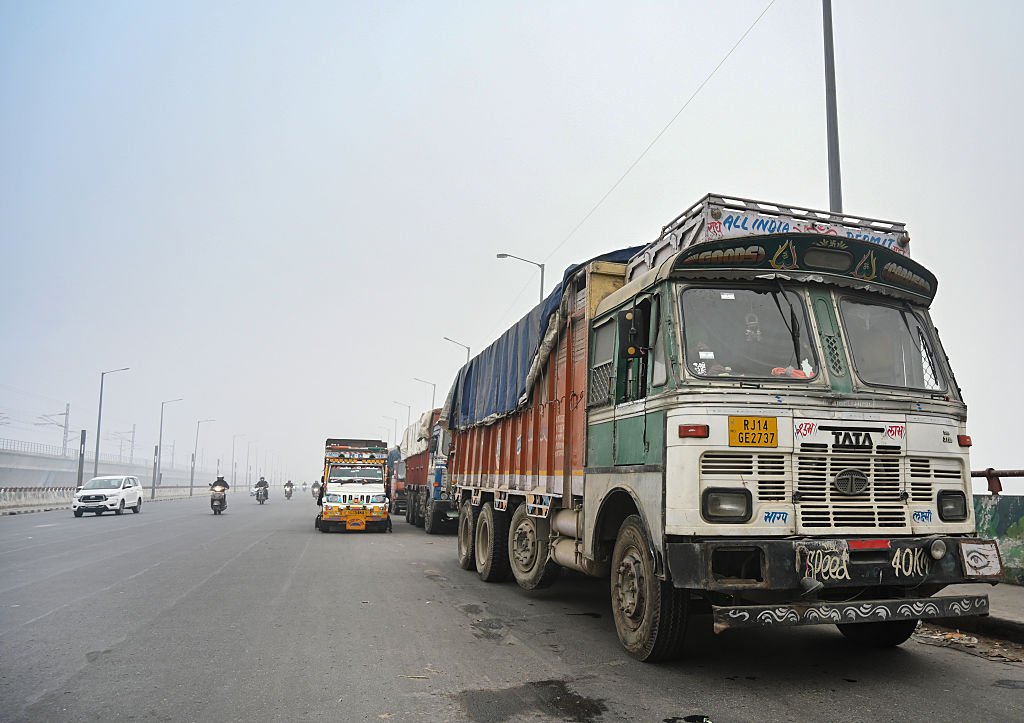
NOIDA, INDIA - DECEMBER 19: Trucks seen parked in queues near Kalindi Kunj toll plaza after Delhi Government imposed a ban on older diesel vehicles as part of measures to curb air pollution, on December 19, 2025 in Noida, India. Delhi government has implemented a ban on entry for non-BS-VI private vehicles and enforced the 'No PUC, No Fuel' rule to curb worsening air pollution. Authorities have deployed police and transport teams at checkpoints and fuel stations as AQI remains in the 'very poor' to 'severe' range. (Photo by Sunil Ghosh/Hindustan Times via Getty Images)
The Union Cabinet, chaired by Prime Minister Narendra Modi, on Wednesday approved a two-year scheme aimed at replacing older trucks and buses operating in the Delhi-NCR region with cleaner BS-VI-compliant or electric vehicles. The initiative will be funded through the National Capital Region Planning Board (NCRPB) under the Ministry of Housing and Urban Affairs and will be implemented by the Ministry of Road Transport and Highways and the Ministry of Petroleum and Natural Gas in coordination with the governments of Delhi, Haryana, Rajasthan and Uttar Pradesh.
According to the Ministry, the scheme has a total outlay of ₹9,585 crore, including ₹5,041 crore from the central government and an estimated ₹1,601 crore in tax concessions from participating states. It targets around 2.07 lakh vehicle owners in the NCR region, including 1.91 lakh trucks and 16,329 buses.
Owners of BS-IV and older vehicles will be encouraged to replace them with BS-VI-compliant or electric vehicles. BS-III and older vehicles will have to be scrapped at registered vehicle scrapping facilities, while BS-IV vehicles may either be scrapped or sold outside NCR in non-NCAP cities and towns. In Delhi, light goods vehicles purchased under the scheme must be electric, while buses will have to be either BS-VI CNG or electric.
The Ministry said the initiative is expected to significantly reduce vehicular emissions in the region, where air pollution continues to be a major public health concern. As per a source apportionment study by ARAI and TERI, the transport sector accounts for 14% of PM2.5 emissions, 40% of carbon monoxide emissions and 63% of nitrogen oxide emissions in Delhi-NCR. Trucks and buses contribute 36% of PM2.5 emissions despite forming only 3% of the vehicle fleet. A single pre-BS heavy-duty vehicle emits as much pollution as 14 BS-VI vehicles, while a BS-IV vehicle emits 2.7 times more than a BS-VI equivalent.

To promote adoption, the Centre will provide a 5% interest subvention on loans for five years, monthly fuel vouchers of up to ₹4,800 depending on vehicle category, and lump-sum incentives for electric vehicle purchases or Certificate of Deposit trading. State governments will waive registration fees, offer up to 100% motor vehicle tax concessions on new vehicles and 50% concessions on used vehicles for 10 years, and also waive pending liabilities on old vehicles enrolled under the scheme. Participating automobile manufacturers will extend discounts of 8% on ex-showroom prices.
The scheme will be implemented through a fully digital platform enabling eligibility verification, automated benefit disbursal, and monitoring of emission reduction outcomes. While enrolment will remain open for two years, central benefits will continue for five years from the date of registration of new vehicles. An Empowered Committee chaired by the Cabinet Secretary will oversee implementation, while District Collectors and District Magistrates will handle monitoring at the district level across the NCR region.
 ----------------------------------------------------------------------------------------------