
The expanding role of women officers in India’s armed forces
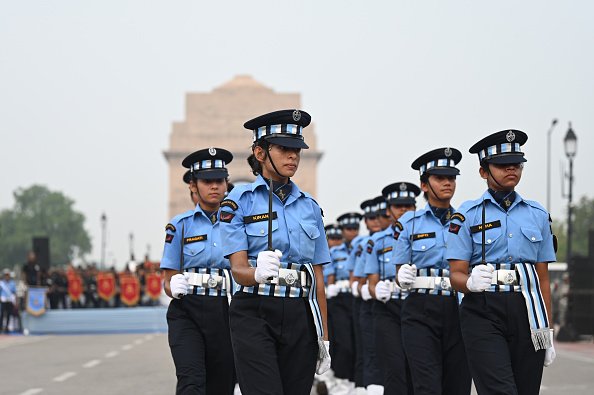
NEW DELHI, INDIA - JULY 26: Agniveervayu women from Indian Air Force came together to form the first ever all women drill live at India Gate, on Kargil Vijay Diwas on July 26, 2024 in New Delhi, India. (Photo by Salman Ali/Hindustan Times via Getty Images)
The growing presence of women in the Indian Armed Forces reflects a significant institutional transformation in India’s defence sector. In celebration of International Women’s Day, the increasing participation of women in operational, leadership, and strategic roles highlights a steady move toward greater gender inclusion in the military. Emphasising the importance of women in nation-building and national security, Prime Minister Narendra Modi often stresses that the rise of Nari Shakti is crucial to India’s progress. This shift is evident both in numbers and responsibilities, with women officers rising from about 3,000 in 2014 to over 11,000 today, along with expanded access to training, command roles, and specialised operational positions.
How did women first enter the armed forces?

Historically, women’s participation in the armed forces started mainly in medical services. In 1958, women doctors received regular commissions in the Army Medical Corps on the same terms as men. A significant policy change occurred in 1992 when the armed forces opened officer-level entry to women. The Indian Army launched the Women’s Special Entry Scheme, enabling women to be commissioned into non-combat branches. Simultaneously, the Navy and Air Force also began inducting women officers for the first time. These actions established the foundation for gradually expanding opportunities across the Army, Navy, and Air Force, transforming women’s roles from limited support functions to active operational involvement.
What reforms have expanded opportunities?

In recent years, institutional reforms have sped up this integration. Women officers are now being considered for promotion to the rank of colonel (select grade) and assigned to command roles. To ensure career progression is not affected during the transition, waivers have also been introduced for officers who could not complete mandatory courses earlier. In the Indian Army, women officers are now being granted permanent commissions across 12 arms and services, including medical branches, thereby strengthening long-term career stability and leadership opportunities.
What changes have taken place in the Navy and Air Force?
Parallel changes have occurred in the Navy and Air Force. The Indian Navy has expanded opportunities for women officers by deploying them on warships and opening nearly all branches and specialisations, except submarines, for induction. Women officers are also serving as pilots and naval air operations officers and are now eligible to join the remotely piloted aircraft stream. The Air Force, which first inducted women pilots in the 1990s in combat support roles, formalised the induction of women into combat streams in 2022, thereby permanently opening fighter roles. Women are also entering the services through new pathways such as the National Defence Academy and the Agnipath scheme.
Why is the NDA entry significant?

The entry of women cadets into the National Defence Academy since 2022 marks a significant shift in military training and leadership development. In 2025, 17 women cadets graduated from the academy in May, and another 15 in November. As of early 2026, a total of 158 women cadets have joined the NDA. The army also increased the annual intake of women cadets from 80 to 144 vacancies in 2024. State-wise participation indicates a growing interest across the country, with Haryana having the highest number of women cadets, followed by Uttar Pradesh and Rajasthan.
What leadership milestones have women officers achieved?
Women officers are also increasingly visible in operational achievements and leadership milestones. Lieutenant General Sadhna Saxena Nair became the first woman to head the Army’s medical services as Director General Medical Services (Army). Colonel Ponung Doming commanded the world’s highest Border Task Force in the northern sector. At the same time, Squadron Leader Bhawana Kanth became the first Indian woman fighter pilot qualified for combat missions during daytime operations. In naval aviation, Sub Lieutenant Aastha Poonia became the first woman pilot to be streamed into the fighter category. In contrast, Squadron Leader Shivangi Singh became India’s first woman Rafale fighter pilot.
What role do women officers play internationally?
Beyond national deployments, Indian women officers are also contributing to global missions and peacekeeping operations. More than 154 Indian women personnel are currently serving in six United Nations peacekeeping missions. India has already achieved about 22 per cent representation in the staff officer and observer categories, moving closer to the UN’s gender parity targets for peacekeeping by 2028. Officers such as Major Swathi Shanthakumar and Major Radhika Sen have also received international recognition for their contributions to gender-responsive peacekeeping initiatives.
What lies ahead?
As women continue to assume leadership roles, participate in operational deployments, and enrol in military training institutions in growing numbers, their increasing presence is enhancing both the professionalism and diversity of India’s armed forces. The ongoing reforms, along with broader recruitment and leadership opportunities, are expected to further boost women’s involvement in defence services in the coming years, strengthening gender inclusion as a core element of modern military capability and national security.
 ----------------------------------------------------------------------------------------------