

BBAU Organizes World Environment Day Awareness Program; 300 Saplings Planted Under the ‘Ek Ped Maa Ke Naam’ Campaign
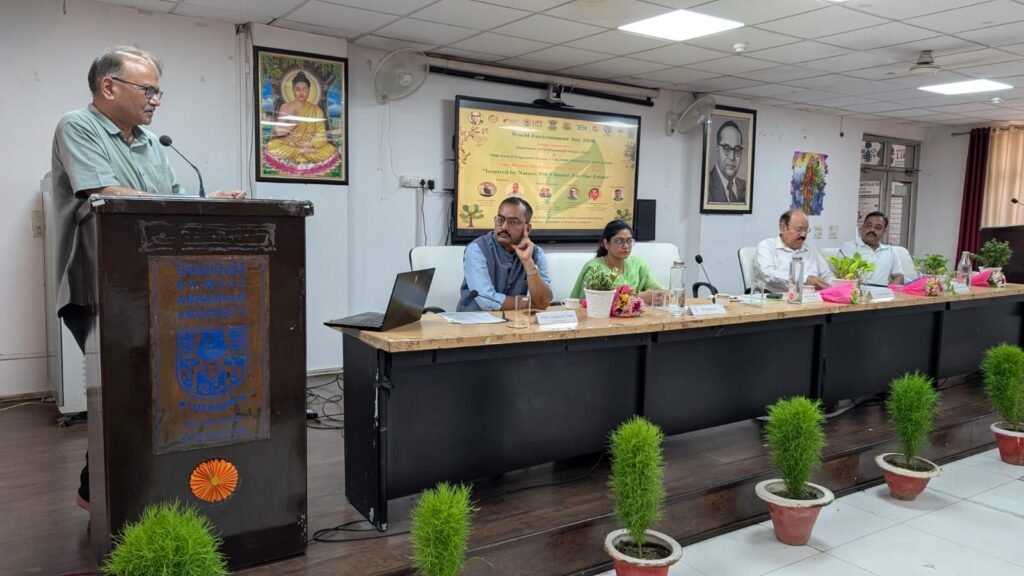
Lucknow:On the occasion of World Environment Day, a special program was organized on June 5 at Babasaheb Bhimrao Ambedkar University (BBAU) by the Department of Environmental Science, BBAU, in collaboration with the NBRI–Environmental Information, Awareness, Capacity Building and Livelihood Programme (NBRI-EIACP). The event was held on the theme “Inspired by Nature: For Climate. For Our Future.” The program was presided over by the Vice-Chancellor of the University, Prof. Raj Kumar Mittal. The Chief Guest and keynote speaker was Dr. Asad Rahmani, former Director of the Bombay Natural History Society (BNHS). Other dignitaries present on the dais included Prof. Venkatesh Dutta, Head of the Department of Environmental Science, BBAU and Program Convenor, Dr. Pankaj Kumar Srivastava, Scientist-G, Environment Technologies Division, CSIR-NBRI and Dr. Anju Patel from NBRI-EIACP.The program commenced with the ceremonial lighting of the lamp and floral tribute to the portrait of Babasaheb Dr. B.R. Ambedkar. Following the University Anthem, the organizing committee welcomed the dignitaries by presenting bouquets and saplings as a token of gratitude. At the beginning, Prof. Venkatesh Dutta formally welcomed the participants and briefed them about the objectives and framework of the event.
In his address, Vice-Chancellor Prof. Raj Kumar Mittal elaborated on the significance of the environment in human life and stated that nature is akin to a mother, making its protection our moral responsibility. He expressed concern over the increasing neglect of the environment due to indiscriminate development and excessive consumption. He noted that several wildlife species are on the verge of extinction and that the rapid depletion of natural resources has become a matter of serious concern. He emphasized the need to adopt lifestyles and development models that utilize natural resources judiciously while maximizing benefits for society. Prof. Mittal urged students and youth to stay closer to nature, embrace simplicity, and make environmental conservation a part of their daily lives. Highlighting the integration of education, entrepreneurship, and environmental sustainability, he stated that education can foster environmental awareness, while innovation and research can pave the way for sustainable development. He further emphasized that environmental entrepreneurship offers immense opportunities for employment and self-employment. Through green technologies, sustainability-based enterprises, and environmental innovations, students can contribute not only to environmental protection but also to strengthening the nation’s economy.
Dr. Asad Rahmani, former Director of BNHS, expressed serious concerns regarding bird conservation, biodiversity, and changing environmental conditions. He pointed out that the excessive use of chemical fertilizers and pesticides in agricultural fields has led to a continuous decline in bird populations. He informed the audience that nearly 48 percent of the approximately 11,000 bird species currently existing worldwide are experiencing population declines, which serves as a serious warning for global biodiversity. Stressing the need to conserve habitats, he explained that habitat fragmentation, land-use changes, and unplanned developmental activities have put many species at risk. Discussing migratory birds, their long-distance journeys, breeding grounds, and habitat distribution across geographical regions, Dr. Rahmani noted that climate change and human interventions are significantly affecting their natural behavior. He also highlighted the adverse impacts of urbanization and modern infrastructure, such as glass buildings, communication towers, excessive artificial lighting, and other structures, which pose serious threats to birds. He emphasized that birds are not only an integral part of ecosystems but also play crucial roles in pollination, seed dispersal, pest control, and maintaining ecological balance. Therefore, scientific approaches, public awareness, sustainable development policies, and collective efforts are essential for the conservation of birds and their habitats.

Prof. Venkatesh Dutta emphasized the importance of river conservation and restoration. He stated that rivers are not merely sources of water but the foundation of entire ecosystems, biodiversity, and human civilization. He explained that through scientific and community-based efforts, rivers can be restored to become clean, free-flowing, and life-supporting once again. This requires watershed conservation, rainwater harvesting, effective waste management, protection of natural water sources, and active public participation. On this occasion, he also discussed various initiatives undertaken by BBAU in the fields of environmental conservation and sustainable development. He highlighted the University’s efforts in biodiversity conservation, promotion of green environments, and environmental awareness. Through the Sustainable Development Goals (SDG) Committee, regular plantation drives, effective waste management systems, and eco-friendly initiatives, the University is making significant contributions toward nature conservation. He further noted that educational institutions have a responsibility not only to impart knowledge but also to promote environmental accountability, conservation of natural resources, and a culture of sustainable development.
Dr. Pankaj Kumar Srivastava, Scientist-G, Environment Technologies Division, CSIR-NBRI, spoke about the growing adverse impacts of single-use plastics. He stated that plastic pollution has become a serious global environmental challenge. Highlighting the threat posed by microplastics, he explained that these tiny plastic particles are entering the human body through water, soil, air, and the food chain, raising concerns about potential health impacts. He emphasized that effective plastic waste management and recycling can significantly reduce these adverse effects. Dr. Srivastava also expressed concern about increasing plastic and microplastic pollution in oceans and aquatic ecosystems, which is causing severe damage to marine life, biodiversity, and ecological balance. He advocated for the responsible use of plastics, promotion of recycling, and adoption of sustainable alternatives.

Dr. Anju Patel of NBRI-EIACP highlighted the activities of the NBRI-EIACP Centre. She explained that the Centre works on the theme of “Plants and Pollution” and plays an important role in disseminating environmental information, creating awareness, building capacities, and promoting sustainable lifestyles. The Centre regularly organizes workshops, training programs, awareness campaigns, and community participation activities related to environmental conservation, Mission LiFE, green skill development, biodiversity conservation, pollution control, and environmental education.

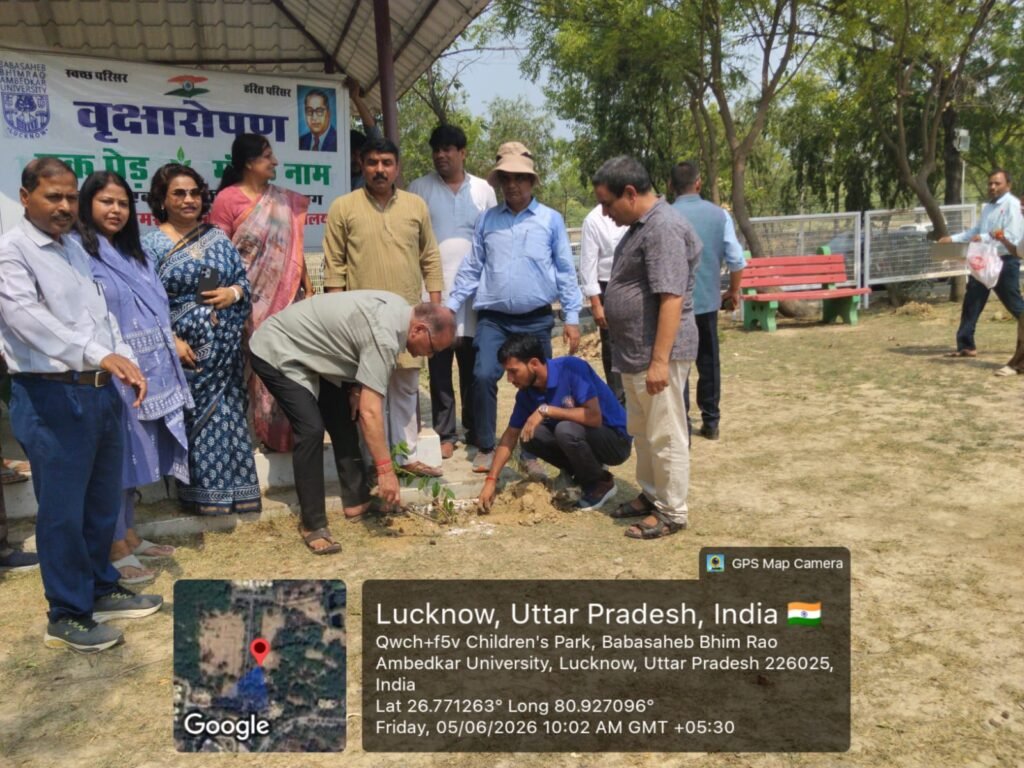
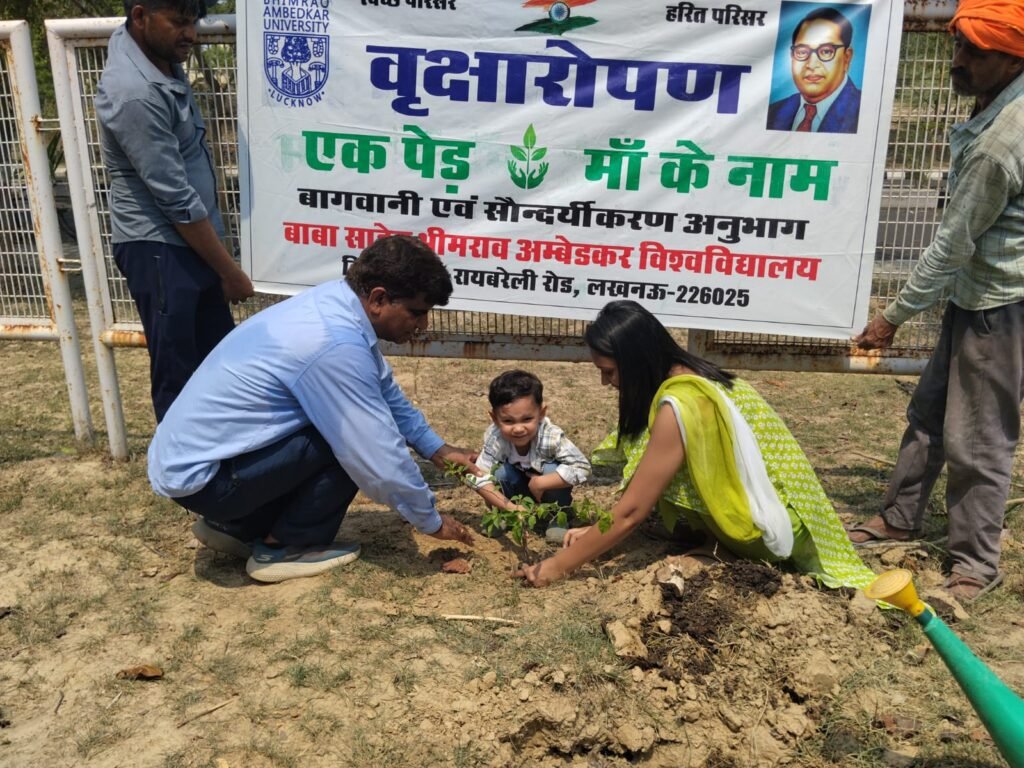
On this occasion, the “Smaller River Restoration Guidebook,” prepared under the guidance of Prof. Venkatesh Dutta, was formally released. The event also featured interactive group-based environmental games, quizzes, and puzzle-solving activities. Participants were administered the Mission LiFE (Lifestyle for Environment) Pledge to encourage environmental conservation and the adoption of sustainable lifestyles. To mark World Environment Day, the University’s Gardening and Beautification Section organized a plantation drive under the “Ek Ped Maa Ke Naam” campaign at the Children’s Park. The plantation program was conducted under the guidance of Prof. G.C. Yadav (Professor In-charge), Horticulture Advisor Mr. Amod Kumar Singh, and Garden Inspector Dr. Sameer Dixit. During the campaign, approximately 300 trees of various species were planted.
Faculty members, non-teaching officers and staff, research scholars, and students actively participated in the event.
 ----------------------------------------------------------------------------------------------