

Scientists explore possibility of dwarf galaxies hosting black holes
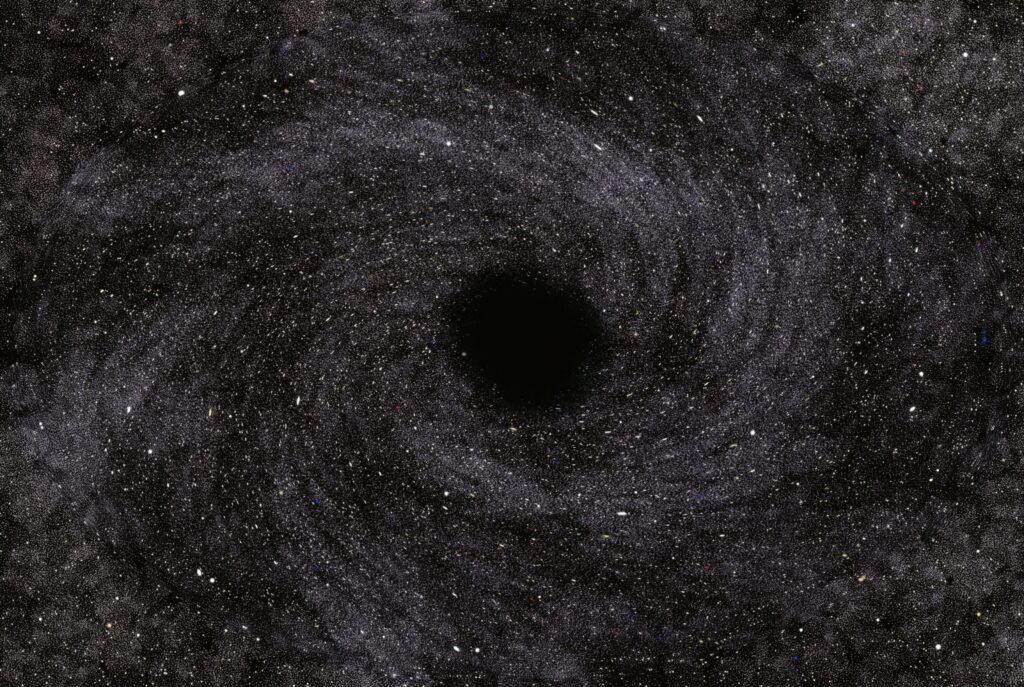
Scientists have explored whether some of the smallest galaxies in the universe — particularly dwarf spheroidal galaxies orbiting the Milky Way — could host black holes, a finding that could deepen understanding of black hole formation and galaxy evolution across cosmic time.
While supermassive black holes are commonly observed at the centres of large galaxies, detecting them in dwarf spheroidal galaxies has remained challenging. These galaxies are extremely faint, gas-poor and dominated by dark matter, making direct observation of central black holes difficult.

The study, conducted by researchers from the Indian Institute of Astrophysics, addresses key questions about how the first black holes formed, how they evolved in low-mass environments, and whether established relationships between black hole mass and stellar velocity dispersion extend to smaller galaxies.
Researchers K. Aditya and Arun Mangalam developed self-consistent dynamical models of dwarf spheroidal galaxies that incorporate three gravitational components — stars, a dark matter halo and a possible central black hole. Using high-quality stellar kinematic data, they analysed the motion of stars to constrain the mass of any potential black hole.

Their approach accounted for stellar anisotropy — variations in stellar velocities in different directions — enabling more realistic modelling of galaxy dynamics. The findings, published in The Astrophysical Journal, were applied to a representative sample of dwarf galaxies.
The study established robust upper limits on black hole masses in these systems, typically below one million solar masses, with some galaxies allowing only significantly smaller values. According to the researchers, the data do not require the presence of massive black holes but remain consistent with intermediate-mass black holes.

By combining new results with existing measurements, the team constructed a unified relationship between black hole mass and stellar velocity dispersion across a wide range — from about 10 to 300 km per second — spanning nearly seven orders of magnitude in black hole mass. This relation smoothly connects dwarf galaxies with massive ones, suggesting a common scaling law across the galaxy spectrum, albeit with greater uncertainty at lower masses.
The researchers also compared their findings with theoretical models of black hole growth. Momentum-driven gas accretion predicts black hole masses of around 1,000 solar masses in dwarf galaxies, while stellar capture processes could allow growth up to 10,000 solar masses or more. Both scenarios fall within the observational limits derived in the study.
Additionally, the study examined tidal stripping scenarios, where dwarf galaxies may have once been larger systems that lost much of their stellar mass through interactions with the Milky Way, offering an alternative explanation for current observations.
The findings have important implications for both theory and future observations. By extending scaling relations to the smallest galaxies, the study provides a key benchmark for simulations of galaxy and black hole evolution.
The research comes at a time when next-generation observatories, such as the proposed National Large Optical Telescope and the Extremely Large Telescope, are expected to deliver unprecedented precision in measuring stellar motions in faint galaxies. These facilities could help test predictions about the presence of primordial black hole seeds in dwarf galaxies.
 ----------------------------------------------------------------------------------------------