

India, Nepal sign MoU to develop AI-powered multilingual language platform
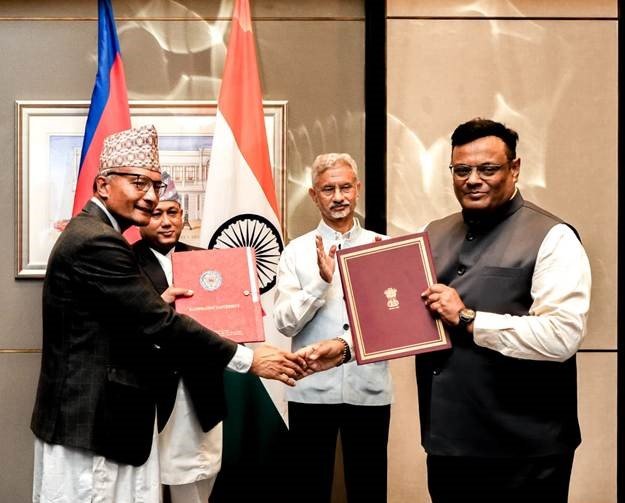
The Digital India BHASHINI Division (DIBD) under the Ministry of Electronics and Information Technology (MeitY) has signed a Memorandum of Understanding (MoU) with Kathmandu University’s Centre for Digital Public Infrastructure and Artificial Intelligence (DPI-AI) to jointly develop multilingual language technologies and digital public infrastructure aimed at improving digital inclusion across India and Nepal.
The MoU was signed by Amitabh Nag, CEO of the Digital India BHASHINI Division, and Prof. Bal Krishna Bal, Associate Dean of Kathmandu University. The agreement was exchanged in the presence of External Affairs Minister Dr. S. Jaishankar and Nepal’s Foreign Minister Shishir Khanal during bilateral engagements in New Delhi, reflecting the two countries’ commitment to strengthening cooperation in emerging technologies and digital transformation.

The partnership seeks to advance Language AI and create a ‘voice-first’ language translation ecosystem for Nepal while supporting multilingual digital public services. Under the agreement, the two institutions will collaborate on developing high-quality Nepali language datasets, speech corpora, speech-to-text and text-to-speech systems, machine translation tools, and multilingual conversational AI capabilities.
The initiative will also focus on preserving and digitising the linguistic and literary heritage of low-resource and underrepresented languages in the India-Nepal region. The collaboration aims to ensure that communities whose languages face the risk of digital exclusion can access AI-enabled services and digital platforms in their native languages.

Leveraging BHASHINI’s open and interoperable language technology ecosystem, the partnership will assist Nepal in expanding digital public services in local languages, helping overcome barriers related to language, literacy and digital access. The MoU also envisages joint research projects, training programmes, capacity-building initiatives and pilot projects in Natural Language Processing (NLP), multilingual AI and Digital Public Infrastructure.
According to officials, the collaboration is expected to generate new opportunities in education, skill development, digital commerce and public services for students, entrepreneurs and professionals in Nepal while strengthening regional cooperation in technology and innovation.

Amitabh Nag said the partnership marked an important step in extending inclusive language technology beyond India’s borders. He noted that BHASHINI’s Digital Public Infrastructure model has the potential to improve digital access for millions across South Asia while strengthening shared linguistic and cultural heritage.
Prof. Bal Krishna Bal said the agreement reflected a common commitment by India and Nepal to harness artificial intelligence for linguistic inclusion and social impact. He added that the collaboration would promote research, innovation and capacity-building in multilingual AI while ensuring that linguistic diversity becomes an asset in the digital age.
BHASHINI, India’s national initiative for AI-driven multilingual digital inclusion, currently supports 36 Indian text languages, 23 Indian voice languages and 35 international languages. Through its National Hub for Language Technology, the platform powers more than 800 government websites and processes over 15 million AI inferences every day.
 ----------------------------------------------------------------------------------------------