
PM Modi hails rice revolution and Kerala Kumbh revival in ‘Mann Ki Baat’
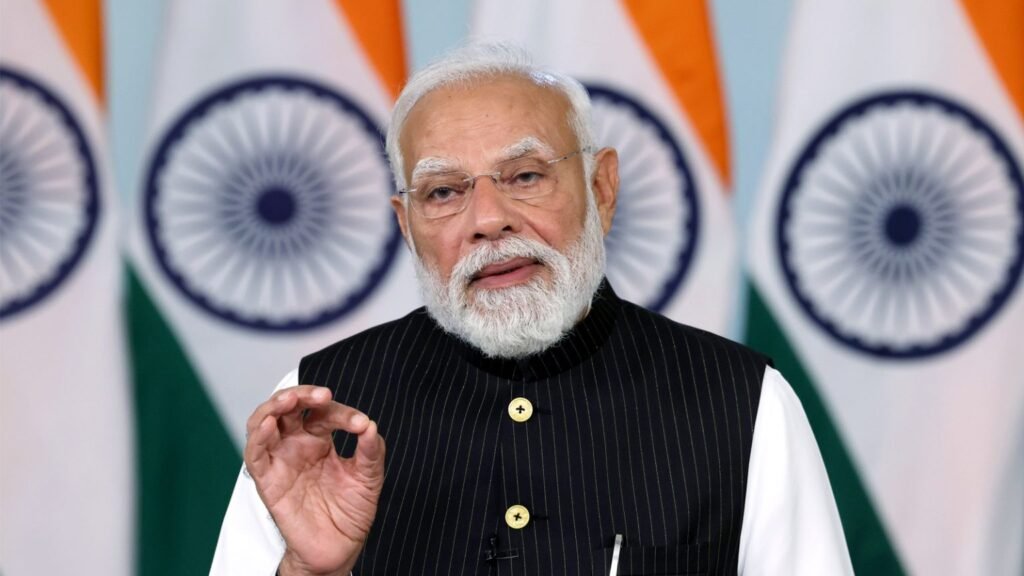
Prime Minister Narendra Modi on Sunday celebrated India’s agricultural achievements and the revival of ancient cultural traditions, describing both as powerful symbols of a nation reconnecting with its heritage while strengthening its global footprint.
Addressing the 131st episode of his monthly radio programme Mann Ki Baat, the Prime Minister praised farmers for blending tradition with innovation and for preserving India’s agricultural diversity.

“Our farmers are not just food providers… they are true devotees of the earth. One should learn from our farmers what it is to turn soil into gold,” he said. “Our farmers today are blending both tradition and technology, and I am pleased to see that our farmers are now focusing not just on production but also on quality, value addition, and new markets.”
He cited the example of a young farmer from Odisha who adopted integrated farming practices by cultivating vegetables, fruits and fish together, improving land use and boosting income. “Traditional farming, vegetables, fruits and fish are all being undertaken in one place. This has led to better land use, water savings, and additional income,” he noted.
Highlighting a unique initiative in Kerala’s Thrissur district, the Prime Minister said, “In Kerala’s Thrissur district, there’s a village where 570 varieties of rice are grown in a single field. This includes local varieties, herbal varieties, and even varieties imported from other states. This isn’t just farming, it’s a massive campaign to preserve seed heritage.”
He underlined the larger impact of farmers’ efforts. “The results of our farmers’ hard work are reflected in the statistics also. Today, India has become the world’s largest rice producer. Producing over 150 million tons of rice is no small achievement. We are meeting our own needs and contributing to the global food basket.”
The Prime Minister also pointed to the increasing export of Indian agricultural products. “Agricultural products are now reaching foreign countries more easily by air. Nanjangud bananas from Karnataka, Mysuru betel leaves, and Indi lemons were exported to the Maldives. These products are known for their taste and quality and have even received the GI tag. Today’s farmer seeks quality, is also increasing quantity and is making his mark as well,” he said.

Shifting to cultural themes, PM Modi recalled last year’s grand gathering at the Maha Kumbh Mela in Prayagraj. “You surely remember the amazing images of the Maha Kumbh around this time last year. The sea of humanity surging on the banks of the Sangam, the immense flow of faith, and in that sacred moment of bathing, it seemed as if India was ‘in communion’ with its ‘Sanatan Chetana’,” he said.
Drawing a parallel with a similar tradition in Kerala, he spoke about the revival of the centuries-old Mamangam festival.
“On the land of Kerala, in Tirunavaya on the banks of the Bharatappuzha River, there is a centuries-old tradition – Mamangam. Many people also call it the Maha Magha Festival or Kerala Kumbh. Bathing in the holy river during the month of Magha and making that moment an indelible memory of life is its soul,” he said.
He noted that the tradition had faded over time. “For nearly two hundred and fifty years, this event had not been celebrated with the same grandeur as it used to be. But today, in our country, which is re-recognizing its heritage, history has taken another turn. This time, the Kerala Kumbh was successfully held without any major announcement. People communicated with each other about it, word spread, and soon, devotees began arriving at Tirunavaya every day.”
Describing the massive turnout as a testament to India’s enduring spiritual consciousness, PM Modi said, “Whether it’s the Maha Kumbh or the Kerala Kumbh, it’s not just a festival of bathing. It’s a reminiscential awakening of memory. It’s a re-remembrance of culture. From North to South, the rivers may be different, the banks may be different, but the stream of faith is the same—this is Bharat.”
Emphasising unity in diversity, he added, “Be it Mahakumbh or Kerala Kumbh, it is not just a festival of taking holy dips, but an awakening of memory, a renewal of culture. The rivers and the riverbanks can be different from North to South, but the flow of faith is the same. This is India.”