Scindia: There will be allocation of spectrum for satellite broadband
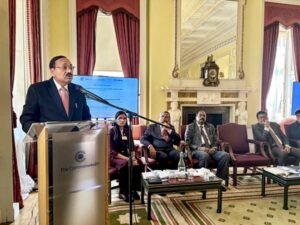
New Delhi| Spectrum will be allocated for satellite broadband, not auctioned. Union Telecom Minister Jyotiraditya Scindia made this clear on Thursday. The Union Minister’s stance is contrary to the demands of Indian billionaires Mukesh Ambani and Sunil Mittal. Elon Musk’s company Starlink can benefit from this stance of the government.
Despite the allocation, satellite broadband spectrum will not be given for free and telecom regulator TRAI will fix the price for it, Scindia told PTI in an interview. Scindia said, “Each country will have to follow the International Telecommunication Union (ITU), which is the policy making organization for spectrum in space or satellites, and ITU has been very clear in the matter of giving spectrum on assignment basis”. Also, if you look around the world today, I don’t see a single country that auctions spectrum for satellite”

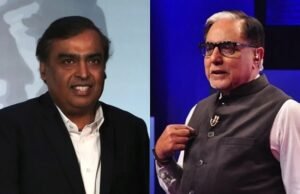
India is a member of the International Telecommunication Union (ITU), the United Nations agency for digital technology. Global counterparts like Musk’s Starlink and Amazon’s Project Kuiper have supported the administrative allocation. Ambani’s Reliance Jio has been vocal about the need to allocate spectrum through auctions to provide a level playing field to older operators who buy airwaves and set up infrastructure like telecom towers. Airtel’s Mittal had also stressed the need to bid for such allocation at an event last month, where Prime Minister Narendra Modi was also present.
Jio and Mittal’s Bharti Airtel-India’s largest and second-largest operators respectively- believe the government’s delivery of satellite broadband airwaves at pre-determined prices will create an environment of unequal competition Because they (companies like Jio and Airtel) will have to compete in the auction to get spectrum for their terrestrial wireless phone networks. Both companies are also vying for a stake in the satellite broadband sector. On the other hand, Elon Musk-led Starlink is demanding administrative allocation of licenses in line with the global trend, as it seeks to enter the world’s fastest growing mobile telephony and internet market.
Scindia said the Telecommunications Act 2023, passed in December, put the matter in ‘Schedule 1’, meaning the allocation of Satcom spectrum will be done administratively. Such allocation will be at a price decided by the government and will allow foreign companies like Starlink to provide voice and data services. If spectrum was auctioned, it would have become expensive to start services for Starlink. Starlink has applied for a license to begin operations in the country. However, Scindia did not give any indication about this application.

The minister said that the regulatory process is very clear and transparent. He informed that the new Telecom Act has been passed and satellite spectrum is clearly part of Schedule One. The minister said, “…And so, we are ready to consider the application of any institution that wishes to invest in India at this time. I think only one or two licenses have been granted right now. And whoever wants to participate, India will definitely welcome him”
Last month, Musk, in a post on X, had described Jio’s demand to bypass sector regulator TRAI’s consultation paper on allocating satellite broadband and not auctioning as “unprecedented”, and when Mittal met the Prime Minister When he said this in his presence, he had asked whether to allow Starlink to provide internet services in IndiaIt was a “much more troublesome” thing.
It was perhaps the first time that Musk, who has a net worth of US$241 billion, more than the combined wealth of Ambani, Mittal and Gautam Adani, had spoken out directly against the equal opportunity demand made by Indian companies. Musk, the brain behind PayPal, founder of Tesla and SpaceX and current owner of X (formerly Twitter), uses his social media platform to express his views on a variety of topics on a daily basis.
 ----------------------------------------------------------------------------------------------