
Revised CPI series to improve monetary, fiscal policy decisions: CEA Nageswaran
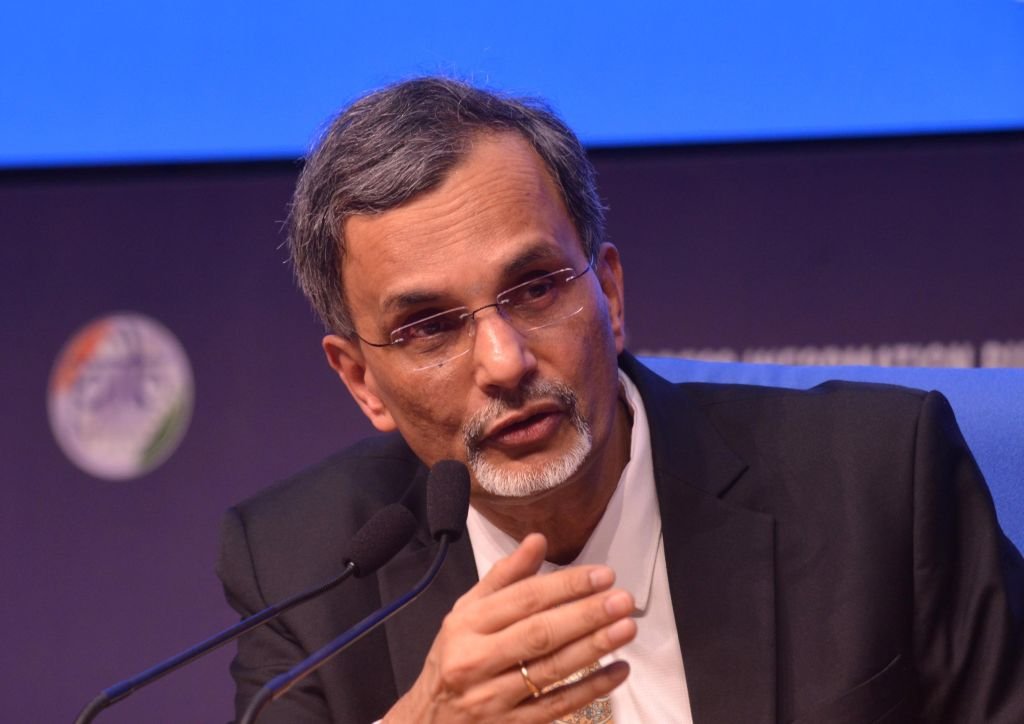
NEW DELHI, INDIA - JANUARY 31: 18th Chief Economic Advisor to the Government of India V. Anantha Nageswaran addresses the media after releasing the India Economic Survey 2024 in New Delhi, India on January 31, 2025. (Photo by Imtiyaz Khan/Anadolu via Getty Images)
Chief Economic Advisor V Anantha Nageswaran said on Thursday that the revised base year of the Consumer Price Index (CPI), now set at 2024, will significantly improve the quality of monetary and fiscal policymaking, as it better reflects current consumption patterns and price structures.
Speaking at the launch of the new CPI series, Nageswaran said the updated index provides policymakers with a more accurate basis to assess real incomes, purchasing power and consumption trends.

“The new CPI aligns us with global best practices. It may even place us a step ahead in the way we collate and present key macroeconomic data on output and prices,” he said, adding that the revised series would enable better differentiation between urban and rural inflation trends at both state and item levels.
The base year for the CPI has been revised from 2012 to 2024, drawing on data from the Household Consumption Expenditure Survey 2023–24. The Ministry of Statistics and Programme Implementation (MoSPI) said the update was necessary to capture structural shifts in consumption behaviour, income levels, urbanisation, services expansion and digitalisation over the past decade.

According to official data, year-on-year inflation for January 2026 stood at 2.75 per cent compared with January 2025, based on the new series.
Nageswaran said aligning the CPI basket with recent expenditure data would make inflation readings more reflective of prevailing economic conditions. “This improves the information base for calibrating monetary and fiscal policy,” he noted.

He added that the reduced weight assigned to food and beverages in the new series could lower volatility in headline inflation. “Inflation may now be driven more by core components rather than food. This could allow monetary policy to focus more on aggregate demand pressures rather than supply shocks,” he said, adding that lower volatility would help anchor inflation expectations among households and businesses.
The ministry is also revising the base year for other macroeconomic indicators, including GDP and the Index of Industrial Production (IIP).
The revision comes after the International Monetary Fund (IMF) in late 2025 assigned India a ‘C’ rating on national accounts, citing concerns over outdated data.
Reserve Bank of India Governor Sanjay Malhotra has welcomed the base year update, saying it would better reflect structural changes in the economy and support more calibrated policymaking.
 ----------------------------------------------------------------------------------------------