
India backs ‘structured international cooperation’ on critical minerals: Jaishankar
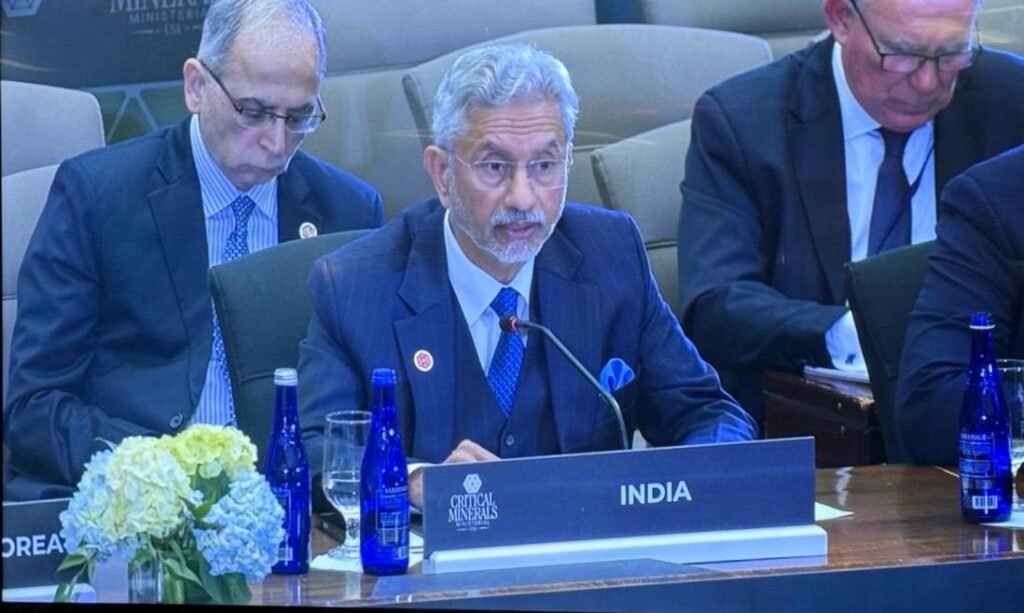
External Affairs Minister S. Jaishankar on Wednesday said India supports structured international cooperation to reduce risks in global critical mineral supply chains, amid a renewed push by the United States for coordinated action among partner countries.
Addressing the 2026 Critical Minerals Ministerial in Washington, Jaishankar flagged the risks posed by excessive concentration in global supply chains and stressed the need for coordinated efforts to ensure secure, diversified and resilient access to critical minerals.

In a post on X, the External Affairs Minister said India has been working to strengthen supply chain resilience through initiatives such as the National Critical Minerals Mission, Rare Earth Corridors and responsible commerce practices. He also conveyed India’s support for the Forum on Resource Geostrategic Engagement (FORGE) initiative.
The ministerial was hosted by US Secretary of State Marco Rubio, along with Vice President JD Vance and senior members of the US administration. Representatives from 54 countries and the European Commission, including 43 foreign and other ministers, participated in the meeting.

The United States announced a major global push to reshape the critical minerals and rare earths market, unveiling new agreements, financing commitments and institutional frameworks aimed at building secure and diversified supply chains as demand rises with the growth of advanced technologies.
According to a US State Department factsheet, critical minerals and rare earths are essential for technologies such as artificial intelligence, robotics, batteries and autonomous systems. The department warned that the current market remains highly concentrated, making it vulnerable to political coercion and supply disruptions.

To address these challenges, the US and its partners committed to developing new sources of supply, strengthening transport and logistics networks and building end-to-end resilient supply chains.
At the ministerial, the United States signed eleven new bilateral critical minerals frameworks or memorandums of understanding with countries including Argentina, the Cook Islands, Ecuador, Guinea, Morocco, Paraguay, Peru, the Philippines, the United Arab Emirates and Uzbekistan. Ten similar agreements have been signed over the past five months, with negotiations completed with seventeen other countries.
The US also announced the launch of FORGE, which will succeed the Minerals Security Partnership and will be chaired by the Republic of Korea through June.
Ahead of the ministerial, US officials held discussions with private-sector leaders on investment opportunities. An MoU was signed between Glencore and the US-backed Orion Critical Mineral Consortium for potential asset acquisitions in the Democratic Republic of the Congo, aimed at securing copper and cobalt supplies.
The US government said it has mobilised over USD 30 billion in investments, loans and other support for critical minerals projects in the past six months. President Donald Trump also announced Project Vault earlier this month, under which up to USD 10 billion has been approved to create a domestic strategic reserve of critical minerals.
 ----------------------------------------------------------------------------------------------