WHO, Ayush Ministry hold key meet to globalize traditional medicine
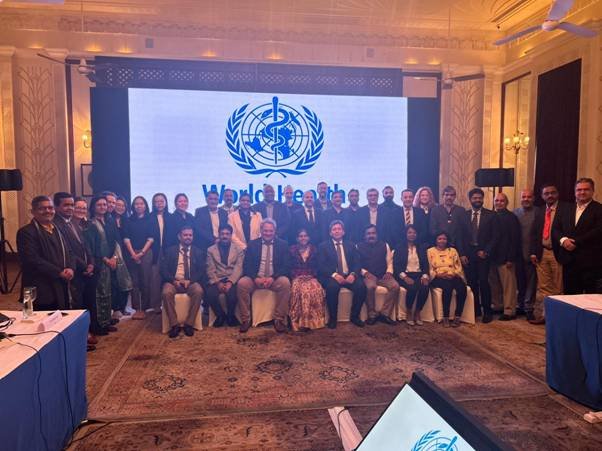
The World Health Organization (WHO), in collaboration with the Ministry of Ayush, held a two-day technical project meeting in New Delhi to advance the integration of traditional medicine systems into global health intervention standards.
The meeting, held on December 20–21, focused on the development of a Traditional Medicine intervention code set under the International Classification of Health Interventions (ICHI), a global standard used for classifying healthcare procedures. The initiative follows a Memorandum of Understanding and donor agreement signed between the Ministry of Ayush and WHO in May this year, under which India is providing financial and technical support to bring Ayurveda, Siddha and Unani systems into the global healthcare framework.
Ministry of Ayush said the effort aligns with Prime Minister Narendra Modi’s vision of taking Ayush systems to a global audience through scientific validation and standardisation. A dedicated ICHI module is expected to enhance global recognition, credibility and wider adoption of traditional Indian medical systems.
The technical sessions were chaired by Joint Secretary, Ministry of Ayush, Kavita Garg, who is leading India’s work on national health intervention codes for Ayurveda, Siddha and Unani. Senior experts from the Central Councils of Research for Ayurveda, Siddha and Unani also participated in the discussions.

Representatives from all six WHO regions, including Africa, the Americas, Europe, Eastern Mediterranean, South-East Asia and the Western Pacific, took part in the meeting. Experts from WHO headquarters in Geneva and the WHO Global Traditional Medicine Centre in Jamnagar were also present, along with delegates from several member countries, including India, Bhutan, Brazil, Iran, Malaysia, Nepal, Sri Lanka, South Africa, the UK and the US.
Integrating traditional medicine into the ICHI framework will enable uniform documentation, reporting and evaluation of traditional health interventions across countries. The initiative is expected to support clinical research, evidence-based policymaking and the inclusion of traditional medicine within national health information systems worldwide.
 ----------------------------------------------------------------------------------------------