
India welcomes key outcomes at COP30, reaffirms push for equity and climate justice
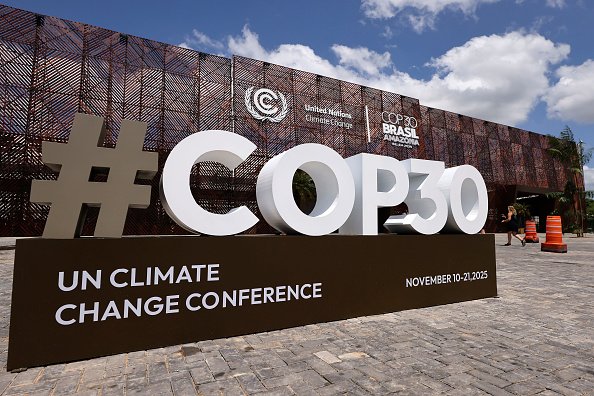
BELEM, BRAZIL - NOVEMBER 3: The COP30 logo is seen in front of the central building ahead of the COP30 Brazil Amazonia 2025 on November 3, 2025 in Belem, Brazil. The Conference of the Parties (COP) meets annually to discuss and negotiate on climate change. Brazil will host the climate summit on November 6 and 7 and the 30th COP meeting between November 10 and 21 in Belem. (Photo by Wagner Meier/Getty Images)
India has welcomed the major outcomes of the UNFCCC COP30 in Belém, reaffirming its long-standing position on equity, climate justice, and the fulfillment of global commitments on climate finance. In its high-level statement delivered during the Closing Plenary on November 22, India expressed appreciation for the inclusive leadership of the Brazilian CoP Presidency.
Acknowledging the Presidency’s balanced approach, guided by the Brazilian ethos of Mutirão, India said the decisions taken at COP30 reflect the collective spirit of cooperation. It noted that progress under the Global Goal on Adaptation (GGA) marks a critical recognition of the disproportionate adaptation needs of developing nations.

A central focus of India’s address was the reminder that developed countries must meet their historical commitments on climate finance. The statement highlighted that efforts to bring Article 9.1 to the forefront were long overdue, adding that promises made at the 1992 Rio Summit must now translate into tangible action.
India also welcomed the establishment of the Just Transition Mechanism, calling it a “significant milestone” that could operationalize equity and climate justice at global and national levels.


Raising concerns over unilateral trade-restrictive climate measures increasingly imposed on developing economies, India said such actions violate the principles of equity and CBDR-RC under the Convention and the Paris Agreement. It cautioned that these issues can no longer be ignored.
Reiterating its principle that nations with the least contribution to climate change must not be burdened with disproportionate mitigation responsibilities, India urged for stronger global support to vulnerable populations—most of whom live in the Global South and face intensifying climate risks.
India concluded by extending gratitude to Brazil for steering the process and called for collective global effort to ensure that the road from Belém leads toward fairness, solidarity, and shared prosperity.
 ----------------------------------------------------------------------------------------------